





Ogun State has finally struck the prize it spent two decades chasing beneath its own soil. The Nigerian National Petroleum Company Limited has commenced drilling at the Eba oil well in Ogun Waterside Local Government Area, federal approval in hand, regulatory and security agencies in tow, as the state closes in on commercial production. It is a moment worth every bit of the celebration now trailing it, writes Seunmanuel Faleye.
Governor Dapo Abiodun has described the development as a landmark for Ogun, projecting job creation, fresh investment and an economic lift for coastal communities that have waited a long time for this kind of attention. The people of Ogun State deserve every bit of joy this milestone brings them, and nothing in this piece is written to take that away.
But everymile stone deserves an accurate timeline. There is a long, well-documented institutional history behind this moment, and Ogun State owes it to itself to remember who actually laid the foundation before the cameras arrived.
That history begins with Otunba Gbenga Daniel, governor of Ogun State between 2003 and 2011, who pushed the state’s oil exploration ambitions long before NNPCL’s drilling rigs ever touched the Eba well. In a statement carried by Punch on June 3, 2024, Daniel, who now represents Ogun East in the Senate, explained that his administration established the Gateway Oil and Gas Development Limited in 2003, with backing from then President Olusegun Obasanjo, and that this was the institutional seed from which everything now being celebrated has grown. Daniel noted that the state’s recognition as a frontier for oil exploration fulfilled a vision kickstarted by the establishment of Gateway Oil and Gas Development Limited in 2003 by his administration.
The Punch report, published the same day stakeholders including the Minister of State for Petroleum Resources, Heineken Lokpobiri, Shell Petroleum Development Company’s Managing Director Osagie Okubor, Nigeria Upstream Petroleum Regulatory Commission chief Gbenga Komolafe, and NNPC Group Chief Executive Officer Mele Kyari visited Ogun State, lays out the technical record in granular detail. The Daniel administration undertook a three-dimensional seismic study of oil and other mineral deposits across the state, with the survey covering a vast stretch of water in Ode Omi in Ogun Waterside, through Laogo Island, Imobi and Itasin in Ijebu East, and Tongeji Island in Ipokia. That seismic work was not symbolic. It sparked a fifty million dollar investment pledge from PGS Exploration Nigeria Limited in April 2004, and in the course of the survey, a large phosphate deposit was discovered around Olusosun in Ifo Local Government, which led to the siting of the Gateway Fertilizer Company there. Even the infrastructure now being celebrated as enabling this oil economy traces back to the same era. The Ogun State Agro-Cargo Airport in Iperu/Ilishan and the Kajola Free Trade Zone in Ifo were conceived to provide transport and logistics support for these initiatives.
The Daniel administration did not stop at survey work. In 2007, a formal Memorandum of Understanding was signed for a multibillion-dollar Olokola Liquefied Natural Gas project, bringing together Ogun and Ondo states as joint owners of the Olokola Free Trade Zone, alongside the then Nigerian National Petroleum Corporation, Chevron, Shell and British Gas. The Olokola Free Trade Zone was, by the former governor’s own account, also positioned to host the Dangote Refinery before that facility was eventually relocated to Lagos. None of this is folklore or political nostalgia. It is documented institutional history, attached to dates, named companies, named technical partners and a named federal president who backed it.
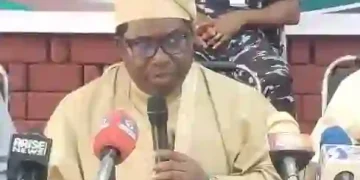
Arise News carried a parallel account that reinforces the same timeline without contradiction. The network reported that Ogun’s emergence as a recognised oil frontier marks the fruition of efforts the Daniel administration initiated through the 2003 establishment of Gateway Oil and Gas Development Limited, and that his government went further to host NNPC’s then Group Managing Director, Funsho Kupolokun, to advance the state’s oil-prospect profile years before the current administration inherited the file. Two independent media organisations, reporting separately, arrived at the same documented origin point. That is not coincidence. That is the historical record holding firm.
None of this diminishes what is happening today. There is nothing dishonourable about a sitting government presiding over the harvest of seeds it did not plant. Governance is supposed to be a relay, not a sprint that resets to zero every four or eight years. Infrastructure, institutional frameworks and investment pipelines often take decades to mature, and any government in power when the fruit finally ripens has every right to manage that moment well and claim the administrative credit for delivery. Dapo Abiodun’s government deserves recognition for seeing the Eba well drilling through to this stage, for hosting the federal delegation, and for whatever security, environmental and community engagement work his administration is doing to keep the project on track.
What is dishonourable is erasure. There is a difference between inheriting a legacy and inventing one. The pattern with this administration, visible in how it has handled the Agro-Cargo Airport narrative and now the oil exploration story, leans toward the latter. Projects with clear paper trails, named officials, dated MOUs and on-record statements from the people who built them are being repackaged as fresh inventions of the present government, as though Ogun State’s institutional memory began in 2019. It did not. Chief Alex Onabanjo, who served on the early oil and gas committee structures of that era, is alive. Chief Bode Mustapha is alive. Mr Femi Babalola, who served as secretary of the Oil and Gas Committee under that administration, is alive. These are not ghosts being invoked for political convenience. They are living witnesses to a process that long predates the current government, and journalism owes them, and the historical record, the discipline of getting the timeline right.



Ogun State should celebrate the Eba well. It should celebrate every job it creates, every naira of investment it attracts, and every coastal community that finally sees its waterside geography turned into shared prosperity rather than neglect. But celebration and historical accuracy are not in competition. A state that lets its leaders rewrite who built what, simply because the cameras are rolling for someone else now, is a state setting itself up to keep forgetting the people who actually do the long, unglamorous, unrewarded work of nation-building. Gbenga Daniel’s name belongs in this story, permanently and unambiguously, not as a courtesy footnote, but as the documented origin point of a vision that took more than two decades to reach the surface.
Seunmanuel Faleye is a Public Affairs Analyst, he writes from Ijebu Ode.
- U.S. Names Brandon Hudspeth New Consul General in Lagos
- Osun Election: Davido Taunts Okpebholo After Adeleke’s Victory, Says ‘Nah Me And You Tomorrow’
- Adeleke Reaffirms Support for Tinubu’s 2027 Re-Election
- INEC Closes Situation Room After Adeleke’s Osun Victory
- Tinubu Congratulates Adeleke, Says Democracy Will Flourish in Nigeria

Seunmanuel Faleye is a brand and communications strategist. He is a covert writer and an overt creative head. He publishes Apple’s Bite International Magazine.