





The Federal Government has defended the economic and governance reforms introduced by President Bola Tinubu’s administration, insisting that Nigeria is making steady progress despite the challenges and temporary hardships associated with the ongoing transformation agenda.
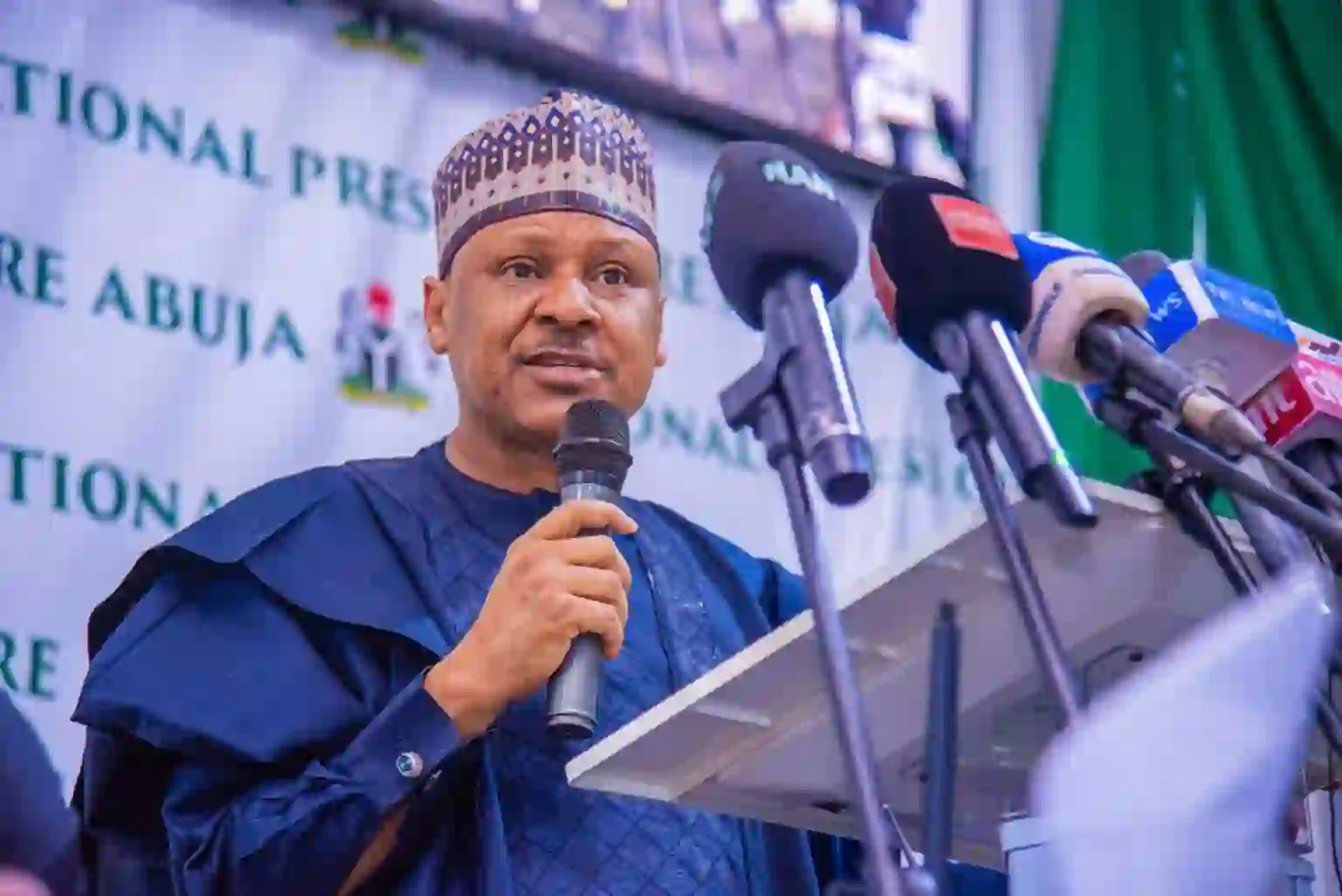
Speaking during a Democracy Day press briefing in Abuja to commemorate Nigeria’s 27 years of uninterrupted democratic rule and the third anniversary of the Renewed Hope Agenda, senior government officials presented what they described as evidence of economic recovery, institutional reforms and improved social interventions across the country.
Minister of Information and National Orientation, Mohammed Idris, described Democracy Day as an important occasion for national reflection, accountability and appreciation of the sacrifices made by pro-democracy heroes who fought for democratic governance in Nigeria.
He paid tribute to the late Chief Moshood Kashimawo Olawale (MKO) Abiola, widely regarded as a symbol of Nigeria’s democratic struggle, while also recognizing the contributions of President Bola Tinubu and other activists who played key roles in the restoration of civilian rule in 1999.
According to Idris, this year’s Democracy Day celebration is particularly significant because it coincides with the third anniversary of the Tinubu administration, providing an opportunity to assess the achievements and impact of the government’s policies.
“Twenty-seven years of uninterrupted democratic governance is a milestone worthy of celebration. It reflects the determination of Nigerians to uphold democratic values, strengthen institutions and build a more prosperous nation,” he said.
Representing President Tinubu at the event, Secretary to the Government of the Federation (SGF), Senator George Akume, acknowledged the economic difficulties facing many Nigerians but maintained that the administration’s policies are beginning to produce measurable results.
He admitted that inflation, insecurity and the uneven impact of reforms continue to affect citizens but stressed that the country is gradually moving from economic vulnerability toward greater stability.
“Government will never claim that every challenge has been solved. However, evidence shows that Nigeria is moving in the right direction—from fragility toward firmer footing, from temporary measures toward lasting reforms, and from isolated interventions toward a coordinated development strategy,” Akume stated.
Highlighting recent economic indicators, the SGF disclosed that Nigeria’s Gross Domestic Product (GDP) recorded growth rates of 4.07 per cent in the fourth quarter of 2025 and 3.89 per cent in the first quarter of 2026, according to data from the National Bureau of Statistics (NBS).
He said the figures reflect increasing investor confidence, stronger market activities and growing productivity across various sectors of the economy.
Akume also pointed to the administration’s fiscal reforms, particularly the signing of four major tax reform laws in June 2025 aimed at simplifying tax compliance, improving transparency and increasing domestic revenue generation.
One of the administration’s flagship achievements, he said, is the Student Loan Scheme. Since the enactment of the Student Loan Act in April 2024, the Nigerian Education Loan Fund (NELFUND) has supported more than 1.058 million students across the country.
According to him, over N184 billion has been disbursed for tuition fees and upkeep allowances, making the initiative one of the largest educational support programmes in Nigeria’s history.
The government also highlighted the impact of its social welfare programmes. Akume revealed that the Renewed Hope Conditional Cash Transfer Programme, designed to benefit 15 million households, had reached more than three million vulnerable households as of August 2025.
In addition, nearly one million Nigerians have benefited from interventions under the Presidential Conditional Grant Scheme and the Nigerian Consumer Credit Corporation (CreditCorp), which has expanded access to consumer credit nationwide.
The SGF disclosed that CreditCorp alone disbursed more than N37 billion in 2025, benefiting over 200,000 Nigerians.
On healthcare, Akume said the administration has intensified efforts to improve access to quality medical services through the implementation of the National Health Insurance Authority (NHIA) Act and the Basic Health Care Provision Fund.
He revealed that government support has been extended to over 8,000 primary healthcare centres, with plans to increase coverage to 13,000 facilities across the country. He added that President Tinubu has directed all Ministries, Departments and Agencies (MDAs) to ensure mandatory health insurance coverage for their workers.
The administration also highlighted its anti-corruption achievements, noting that the Economic and Financial Crimes Commission (EFCC) and the Independent Corrupt Practices and Other Related Offences Commission (ICPC) have continued to recover stolen public funds and prosecute offenders.
Akume disclosed that more than N50 billion recovered by the EFCC has been channelled into supporting the student loan programme.
He further announced that Nigeria was removed from the Financial Action Task Force (FATF) grey list in October 2025, describing the development as a major international endorsement of the country’s anti-money laundering and counter-terrorism financing reforms.
“Accountability in this administration is sacrosanct,” he said.
On security, the SGF acknowledged that terrorism, banditry and other criminal activities remain concerns but insisted that significant progress has been made through increased funding, improved intelligence gathering, regional collaboration and enhanced operational capacity of security agencies.



“The good news is that we are succeeding,” he said, while commending members of the Armed Forces and other security personnel for their dedication and sacrifice.
Akume urged citizens to support security efforts by providing useful information to authorities, stressing that security should be regarded as a collective national responsibility.
The SGF also emphasized the importance of national unity, religious tolerance and shared values in sustaining democratic governance. He disclosed that the Federal Executive Council (FEC) recently approved the National Values Charter to promote discipline, citizenship, service, reciprocity and tolerance among Nigerians.
He reaffirmed government support for the Nigeria Inter-Religious Council (NIREC) as a platform for strengthening harmony between Christians and Muslims and promoting national stability.
Looking ahead to the future, Akume signalled the administration’s readiness to continue implementing its reform agenda beyond 2027, insisting that government remains committed to completing ongoing programmes and scaling up successful initiatives.
“Our responsibility is to finish what we started in 2023. As we approach the 2027 elections, we will expand what is working and ensure that more dividends of democracy reach Nigerians,” he said.
He described June 12 as a reminder of both the sacrifices made to secure democracy and the responsibility of elected leaders to remain accountable to the people.
“This government is prepared to be judged by evidence,” Akume stated, as ministers presented reports highlighting achievements across different sectors of the economy and governance.
READ ALSO:
- CBN Approves Oxford-Trained Adedapo Olagunju To Head JPMorgan’s Proposed Nigeria Merchant Bank
- 2027: North-West Has Chosen Tinubu, Says APC Campaign Council Member
- Stakeholders Call For Inclusive Policies To Promote Gender Equality In Nigeria
- Kaduna Government Debunks N2.3tn APC Rally Spending Claim
- Two Nigerians Wanted In US Over $3.1m Medicare Fraud, Marijuana Conspiracy