










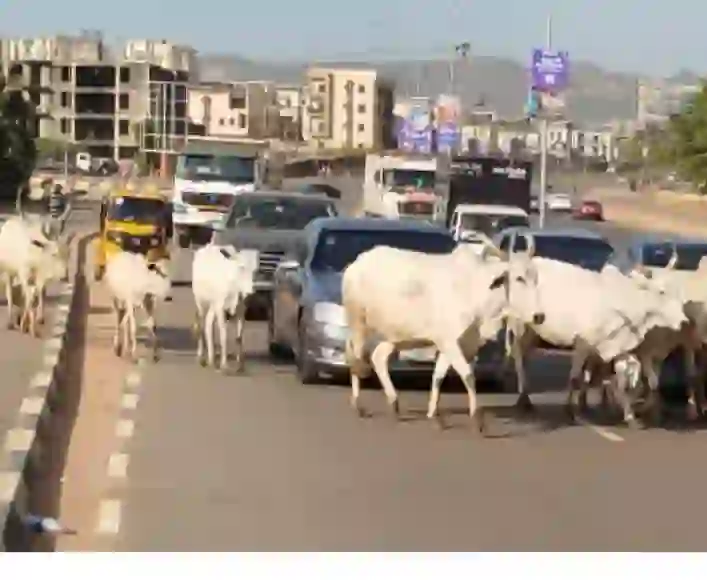
The Federal Government has identified 470 gazetted and legally protected grazing reserves across the country as part of a plan to resettle pastoralists and end open cattle grazing in cities such as Abuja and Lagos.
The Minister of Livestock Development, Idi Maiha, disclosed this while speaking on Arise News about the implementation of the National Dairy Policy Framework and broader plans to overhaul Nigeria’s livestock sector.
He said moving herders into the reserves would make it easier to manage disease surveillance, improve cattle breeds and strengthen animal health monitoring nationwide.
Asked whether Nigerians should expect cattle to disappear from city streets, Maiha said yes, explaining that open grazing was no longer sustainable since long-distance cattle movement was a major driver of low productivity and Nigeria’s inability to meet domestic dairy demand.
“We are sensitising pastoralists to adopt a sedentary lifestyle. Once they settle in designated reserves, all the interventions required to improve productivity become easier to implement,” he said.
He added that the government was also introducing a jaw-tagging system for cattle, which would trigger an alert whenever an animal moved outside its designated boundary, helping to quickly identify strayed or stolen livestock.
On milk production, Maiha said Nigerian cows currently yield an average of 1.2 to 2 litres of milk daily, far below countries like Kenya, where output can reach 30 litres per cow. He blamed the gap on poor livestock genetics, weak feeding systems and inadequate disease control.



Despite Nigeria’s estimated 270 million ruminants — including cattle, sheep, goats and camels — the minister said the country had failed to modernise its livestock genetics, unlike other African nations that have deliberately upgraded their breeds.
He noted that Nigeria still relies largely on traditional, low-yield cattle breeds, even though research institutes and veterinary faculties exist nationwide.
“While every other thing in our national space has changed, we have not been able to transform our livestock by introducing new genetics or selecting based on performance traits. Either of those approaches would have lifted yields from two litres to 15, 20, 30 or even 50 litres per cow per day,” he said.
To tackle the problem, Maiha said the government is focusing on better feeding practices, improved disease control and genetic upgrades, alongside full implementation of the National Dairy Policy Framework to boost local milk output and cut reliance on imports.
READ ALSO:
- Peter Okoye Moves Birthday Date, Says November 18 Became ‘Worst Day’ of His Life
- Political Thugs Attack Obi-Kwankwaso One Million Man March in Warri – Iyovwaye Campaign Council Demands Full Investigation
- FG Sets Up 10-Man Panel To Probe Deaths Of 37 Detainees In NSCDC Custody In Niger
- 3 Abia Policemen Arrested Over Alleged Extortion Of More Than 200 Victims
- ICC Tribunal: Malami, Adesanya struck corrupt deal over Mambilla project