









The Federal Government has revealed that discussions are underway to revive abandoned textile factories across Nigeria and the Ajaokuta Steel Company as part of its broader plan to strengthen the country’s industrial sector and drive economic expansion.
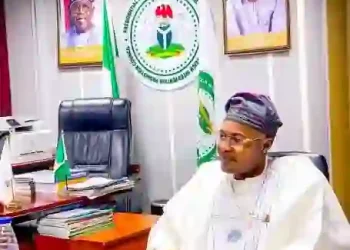
The Minister of State for Industry, Senator John Enoh, disclosed this during an interview on Channels Television on Tuesday, stating that the Tinubu administration is implementing the National Industrial Policy (NIP) to stimulate manufacturing, create employment opportunities, and support Nigeria’s ambition of becoming a $1 trillion economy.
According to Enoh, the government is working to revive the nation’s cotton, textile and garment industry through the Cotton, Textile and Garment Industrial Transformation Programme.


He explained that the initiative seeks to reconnect cotton farmers, textile manufacturers and garment producers to rebuild the value chain that once supported the industry.
The minister also revealed that discussions are ongoing with investors and development partners interested in transforming abandoned textile factories into modern industrial parks.
He expressed optimism that agreements with the investors would be concluded within the coming weeks, paving the way for fresh investments in the sector.
Speaking on the long-delayed Ajaokuta Steel Company project, Enoh said negotiations with an international consortium were progressing, noting that steel production remains essential for Nigeria’s industrial development.
He stressed that meaningful industrialisation cannot be achieved without a functional steel industry and disclosed that further meetings with prospective investors were scheduled in the coming days.
Enoh described industrialisation as the backbone of the Federal Government’s economic agenda, insisting that increased production remains the foundation for sustainable economic growth.
He noted that while fiscal and monetary policies are important, expanding domestic production is critical to achieving the country’s economic targets.
The minister said the National Industrial Policy, introduced earlier this year, is Nigeria’s first comprehensive industrial blueprint in decades and includes a structured implementation framework with clearly assigned responsibilities and regular performance reviews.
He added that the government aims to increase the industrial sector’s contribution to Nigeria’s Gross Domestic Product (GDP) to 25 percent by 2030.
According to him, every industrialised nation is built on a strong manufacturing base, and Nigeria is positioning itself along the same path.
Enoh further disclosed that the government is encouraging value addition to raw materials before export while expanding access to affordable long-term financing through institutions such as the Bank of Industry.
He also said the Nigeria First Policy is being implemented to promote the patronage of locally manufactured products and reduce dependence on imported goods.
Addressing challenges facing manufacturers, the minister acknowledged that energy costs account for nearly 40 percent of production expenses, adding that the government is working on practical measures to make electricity more affordable and reliable for industries.
He expressed confidence that the ongoing reforms and planned investments would strengthen Nigeria’s manufacturing sector, create jobs and support the country’s long-term economic transformation.
READ ALSO:
- Nigeria Renews Commitment To African Union Peace And Development Goals
- Tinubu snubs Ramaphosa’s envoy over xenophobic attacks
- Ex-DSS Director Amachree Blames Buhari Administration for Worsening Insecurity
- Forged State House Letter Used To Register PFIPC, Says Accountant-General
- Osogbo Celebrates Cultural Icon as Ifáyẹmi Ọ̀ṣúndàgbonù Elebuibon Marks 79th Birthday in Grand Style