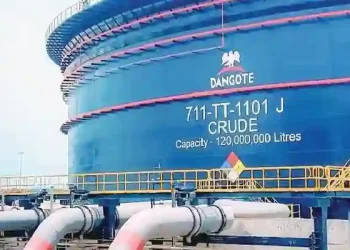






Nigeria lost an estimated N1.76 trillion in potential crude oil revenue after falling short of its OPEC production quota for nine months of 2025 and into January 2026, according to data from the Nigerian Upstream Petroleum Regulatory Commission.
The country was allocated a benchmark of 1.5 million barrels per day (mbpd) by the Organization of the Petroleum Exporting Countries, but consistently failed to hit that mark throughout most of the review period. Over the 10 months of underperformance, Nigeria accumulated a net production shortfall of 18.12 million barrels after accounting for modest surpluses in three months. With Bonny Light crude averaging $72.08 per barrel over the period, the revenue gap amounts to roughly $1.31 billion — or approximately N1.76 trillion at an exchange rate of N1,353 to the dollar.
Nigeria only managed to exceed its OPEC allocation in January, June, and July of 2025. January output hit 1.54 mbpd, edging about 40,000 barrels above quota, while June and July posted smaller overages of between 10,000 and 30,000 barrels per day. Every other month told a different story. Production dipped to as low as 1.39 mbpd in September — the worst month of the period — when the country fell roughly 110,000 barrels per day short of its target, creating a monthly deficit of 3.3 million barrels. March was also a particularly poor month, with output reaching just 1.40 mbpd and leaving a 3.1 million-barrel gap against expectations.


The pattern carried into the new year. January 2026 saw average output of 1.459 mbpd, still 41,000 barrels below the daily quota, adding another 1.27 million barrels to the cumulative shortfall.
Oil prices fluctuated considerably during the period. Bonny Light opened 2025 at $80.76 per barrel but slid to $65.90 by May before recovering above $73 in the middle of the year, then softening again to $66.15 in October.
Despite the sustained underperformance, Nigeria’s total 2025 crude output reached 530.41 million barrels, generating an estimated N55.5 trillion in gross revenue. The N1.76 trillion figure represents only the opportunity cost of missed barrels and does not factor in production expenses, joint venture obligations, cost recoveries, domestic supply commitments, or losses from crude theft.
Industry analysts point to a familiar set of culprits behind the repeated shortfalls — ageing infrastructure, operational disruptions, persistent security challenges across the Niger Delta, and inconsistent field-level performance — all of which continue to cap Nigeria’s ability to fully capitalize on its OPEC allocation.
READ ALSO:
- ANOH Begins Gas Supply to NLNG, Enters Full Commercial Operations
- Wike Says Nigerians Would Back Him Massively in Presidential Race
- Nigeria Set to Receive Revolutionary HIV Prevention Drug Lenacapavir in March
- Lagos State Announces Traffic Diversion Ahead of Ogunnusi Road Reconstruction in Ikeja
- U.S. Coast Guard Team Lands in Lagos for Key Port Security Assessment