





There is something deeply troubling about Nigeria’s electricity sector and polite language barely does it justice. Stripped to its core, the entire system has the hallmarks of an elaborate deception. How else do you explain decades of failure on a problem the country did not even inherit at independence?
Older Nigerians will remember a time when hospitals and schools functioned without generators — because they simply did not need them. That era is long gone. Today, every home and every business, no matter how modest, must secure an alternative power source just to stay afloat. What was once a national utility has become a national burden.
The numbers tell a damning story. Thirty years ago, Nigeria struggled to generate 4,000 megawatts — already insufficient for the population at the time. Today, with a population nearly twice as large, the country is still fighting to sustain that same figure. In the same period, the sector has gone through at least four rebranding exercises — from ECN to NEPA, then PHCN, and now NERC. The names changed. The dysfunction did not.
Successive administrations have collectively poured an estimated 10 trillion naira into the sector, with little more than recurring grid collapses to show for it. The Buhari administration once promised 25,000 megawatts of installed capacity by 2025. That deadline has passed. The money is gone. The darkness remains. For context, South Africa generates roughly 50,000 megawatts for a population a third the size of Nigeria’s — and still experiences occasional power shortages. Nigeria’s ambition of 25,000 megawatts would still have left the country far behind.
The human and economic cost is staggering. Nigerians reportedly paid over 9 billion naira for electricity last year — electricity that barely arrived. Lagos alone is estimated to have spent over 10 billion dollars on solar panels and alternative power sources in the same period. This is why the cost of doing business in Nigeria remains punishing, and why foreign investors keep looking elsewhere.
The distribution companies, which operate with the arrogance of unchecked monopolies, compound the misery. A foreign national recently found himself slapped with an inflated electricity bill, and when he raised objections, he was disconnected and threatened with a hefty reconnection fee. Rather than resolution, he got retaliation. This story is not unusual — it is routine.


The writer speaks from personal experience. Years ago, he purchased a dedicated transformer out of borrowed funds to power a newspaper venture. When the property was later leased out and multiple meters were attached, the transformer was quietly reclassified in the distribution company’s records as public infrastructure. Without any notice, compensation, or courtesy call, workers arrived one day and began connecting other buildings to it. A privately purchased asset was effectively seized. The company name had changed, but the conduct had not.
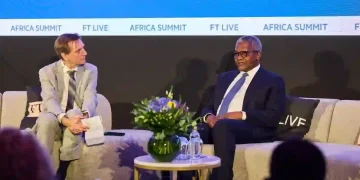
This pattern mirrors what plagued the petroleum sector for years — a web of vested interests, local and foreign, sustained by opacity and subsidy. It took the arrival of Aliko Dangote, with his refinery and his willingness to absorb relentless pressure and political hostility, to begin shaking that structure. The electricity sector now needs a similar intervention. It needs someone with the financial muscle, the strategic depth, and the resilience to withstand the inevitable pushback that comes with disrupting a system built to serve insiders.
The signs of a repeat are already visible. As soon as fuel subsidy ended, power subsidy quietly crept in — possibly drawing from the same circle of beneficiaries. The cycle will not break on its own.
President Bola Tinubu came into office promising to fix the power sector, even staking his re-election on that pledge. By most accounts, electricity supply has worsened on his watch while tariffs have gone up. The symbolism of Aso Rock switching to solar power has not been lost on Nigerians — many read it as a quiet concession that the grid cannot be trusted, even by those who govern it.
The question many are now asking is a simple one: if the president himself has given up on the national grid, why should the rest of Nigeria not give up on him?
READ ALSO:
- OGD hails Tinubu’s transport sector drive
- Rema Explains Why He Doesn’t Flaunt His Wealth on Social Media
- Matawalle Donates Vehicles To Eight Suspended Zamfara Lawmakers Ahead Of 2027 Elections
- Ogun Shuts Schools After Over 100 Pupils Hospitalized From Suspected Gas Emissions
- Libya Frees Swiss, Austrian Women Kidnapped in Niger in 2025