








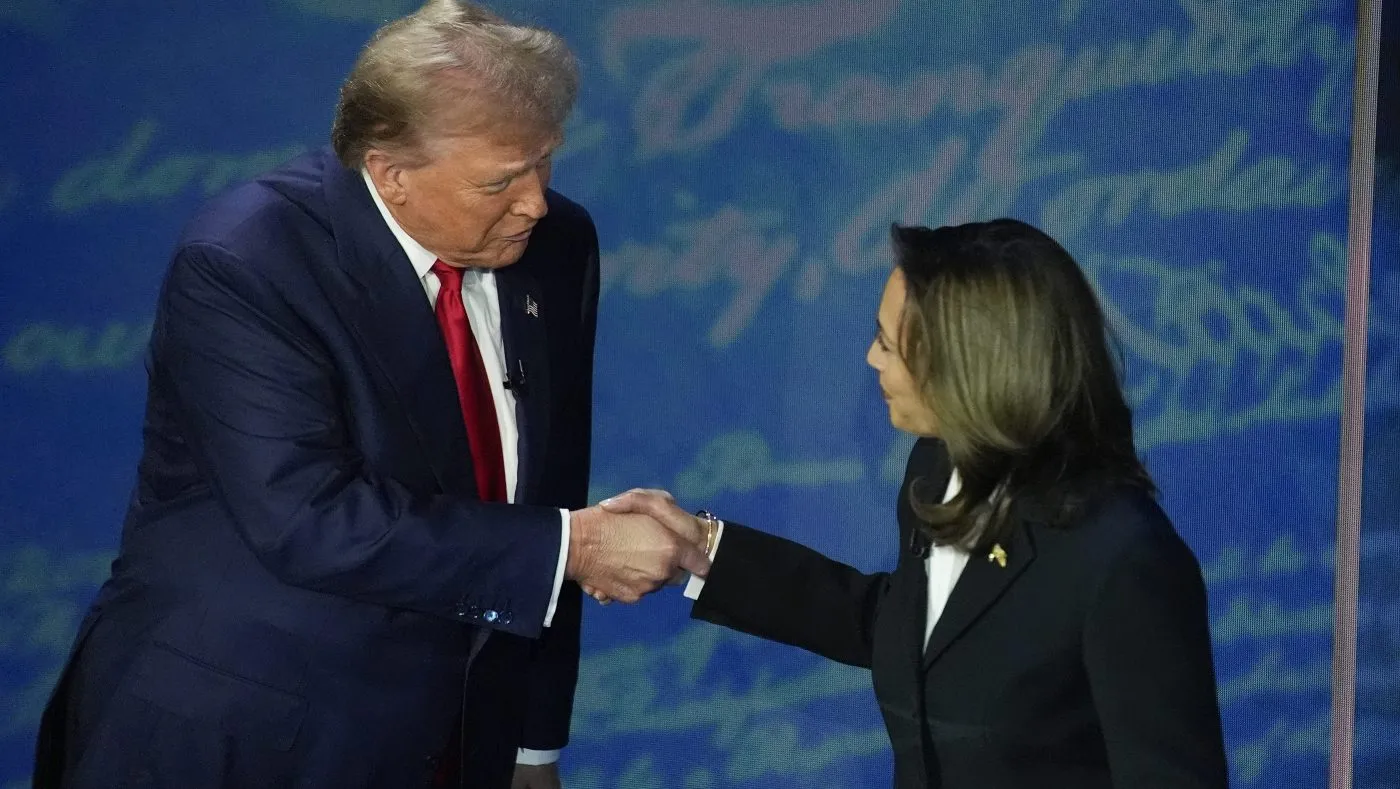
The first presidential debate between Kamala Harris and Donald Trump on September 10 was a highly anticipated event, held amidst a politically charged atmosphere. Despite the tense undercurrents, the debate unfolded smoothly, largely thanks to strict rules that included muted microphones, reducing interruptions and allowing both candidates to articulate their points more clearly.
Harris Takes the Offensive
Vice President Kamala Harris came into the debate with significant stakes, seeking to prove her credentials as the incumbent vice president and a strong challenger for the presidency. She delivered a calm yet assertive performance, strategically aiming at Donald Trump’s record. Harris highlighted Trump’s persistent refusal to accept the results of the 2020 election, underscoring the dangers of undermining democracy by attempting to overturn a legitimate electoral outcome.
Harris also zeroed in on reproductive rights, criticizing Trump’s inconsistent stance on abortion. She argued that his refusal to take a definitive stance on a federal abortion ban was a reflection of his lack of concern for women’s rights, noting that Trump’s policies often worked to restrict access to healthcare for millions of women across the country.
On racial justice, Harris reminded viewers of the significant racial divides exacerbated under Trump’s leadership, noting how his rhetoric had deepened the polarization in America. She painted herself as the candidate who could bridge these divides, emphasizing her long-standing work on issues of civil rights and police reform.


Trump’s Focus on Immigration and Economy
Donald Trump, in turn, sought to turn the conversation to issues he believed would resonate with his base: immigration and the economy. He touted his record of economic growth before the pandemic and promised to restore America’s economic strength if re-elected. However, his approach to immigration stirred controversy as he repeated false claims about migrants, including an outlandish story about them stealing and eating pets. These remarks, designed to stoke fear, drew criticism for being not only misleading but inflammatory.
Trump also declined to commit to a federal abortion ban, a move likely aimed at balancing his appeal to moderates without alienating his conservative supporters. Additionally, his persistent refusal to acknowledge his 2020 election loss continued to cast a shadow over his campaign, with Harris directly challenging him to accept the election results for the sake of democratic integrity.
Harris Gains Celebrity Endorsement
The Harris campaign capitalized on the debate’s outcome by swiftly calling for a second debate, confident in their performance. Additionally, Harris secured a high-profile endorsement from pop icon Taylor Swift, whose 283 million Instagram followers could provide a significant boost in visibility, particularly among younger voters. Swift’s endorsement is viewed as a key asset for Harris, as it taps into the cultural influence of one of the world’s biggest music stars, especially among the Gen Z demographic.
Both candidates came away with their respective talking points intact. Harris effectively challenged Trump on key issues like election integrity, abortion rights, and racial justice, while Trump leaned heavily on his record on the economy and immigration. With this debate setting the stage for an intense election race, the call for a second debate suggests that neither side feels the conversation is over just yet.

Seunmanuel Faleye is a brand and communications strategist. He is a covert writer and an overt creative head. He publishes Apple’s Bite International Magazine.