







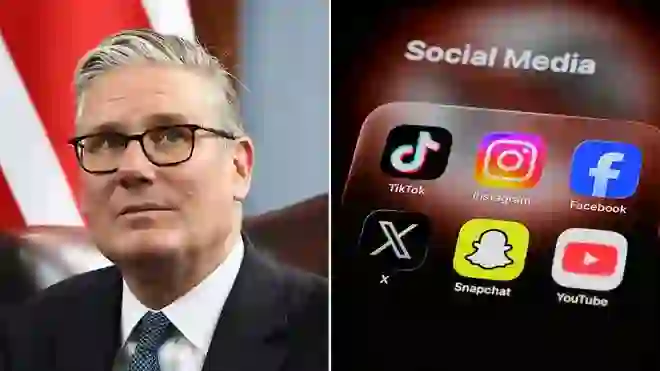
British Prime Minister Keir Starmer has unveiled plans to prohibit children under the age of 16 from accessing major social media platforms, citing concerns over mental health, online safety and exposure to harmful content.
The proposed legislation, which is expected to cover platforms such as Snapchat, TikTok, YouTube, Instagram, Facebook and X, is slated to be introduced before the end of the year, with implementation targeted for spring 2027.
Announcing the initiative on Monday, Starmer argued that many social media platforms are deliberately designed to keep young users engaged for long periods, often exposing them to damaging content and encouraging addictive behaviour.
“We will ban access to social media for all children under the age of 16,” the prime minister declared, adding that many online platforms are contributing to unhappiness among children and exposing them to inappropriate material.
The proposed restrictions will not apply to messaging services such as WhatsApp.
Beyond the social media ban, the UK government is considering a range of additional measures to improve online safety for minors. These include overnight usage curfews, compulsory breaks from endless scrolling features, and stricter regulations for gaming and livestreaming services.
The government said further details of the proposals would be unveiled in July.
Starmer stressed that the administration is also focusing on gaming and livestreaming platforms that allow unknown adults to communicate directly with children.
“Is there a situation in the offline world where you would just let your child pair up with a stranger? An adult that you don’t know about? No. So we’re taking action on that,” he said.
Officials noted that the policy was partly inspired by Australia’s nationwide social media ban for under-16s, introduced in December, and follows a large-scale public consultation involving teenagers testing social media restrictions and app usage limits.
According to the government, the consultation attracted approximately 116,000 submissions, making it the second-largest public consultation in British history. More than 83 per cent of participating parents said the dangers of social media outweighed its benefits, while 91 per cent backed raising the minimum age for social media access to 16.
Reacting to the proposal, YouTube warned that a blanket ban could push young users toward less regulated corners of the internet and potentially increase online risks.



Despite such concerns, the Labour government insists that technology companies must do more to protect children online.
The social media proposal comes shortly after UK authorities directed major technology firms, including Apple and Google, to introduce safeguards preventing children from sending, receiving or accessing nude images on electronic devices.
The Interior Ministry has given companies three months to implement the required protections or face legislation compelling compliance. Officials said the measures are aimed at tackling online abuse, sextortion, coercion and child exploitation.
The government also intends to tighten restrictions on children’s access to pornography and strengthen protections against online predators.
Data from the Internet Watch Foundation showed that 91 per cent of online child sexual abuse reports recorded in 2024 involved self-generated content created by children.
Britain is among a growing number of countries introducing tougher rules on children’s social media use. Canada, Indonesia and several European nations are pursuing similar measures amid rising concerns about the effects of digital platforms on young people’s wellbeing and safety.
READ ALSO:
- Umahi: Lagos-Calabar coastal highway may not be completed if Tinubu loses in 2027
- Tope Alabi warns of legal action over false, defamatory claims
- Folorunso Alakija denies EFCC fraud claim, demands removal of “defamatory” report
- NCC Strengthens Ties With Airtel, IHS Towers to Boost Nationwide Connectivity
- Infantino Secures AFC Backing For Fourth FIFA Term