








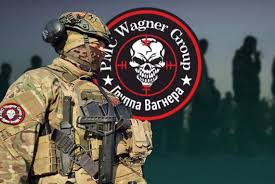
Clearly, Wagner was never just an army. Long before Yevgeny Prigozhin’s private jet went down over Tver in August 2023, his mercenary network had been doing something more subtle than fighting, it had been building the architecture of Russian influence across Africa, one compromised election, one manipulated government, one fabricated news cycle at a time. Prigozhin’s death in 2023 did not dismantle that architecture. It simply changed who held the keys, Seunmanuel Faleye writes.
A sweeping investigation by a consortium of international media outlets, including Forbidden Stories and All Eyes On Wagner, has now confirmed what analysts had long suspected; that, Russia’s Foreign Intelligence Service, the SVR, has absorbed Wagner’s African influence operations entirely, transforming a mercenary franchise into a state-directed propaganda machine of remarkable reach and sophistication.
The vehicle for this takeover is an organisation called Africa Politology, known internally as “The Company.” Built on the bones of Wagner’s political operations, it now functions as the SVR’s primary instrument for reshaping African politics in Moscow’s favour. Nearly 100 consultants work within its structures, deployed across more than 34 countries spanning three continents. Between January and October 2024 alone, its budget was estimated at approximately $7.3 million, roughly $750,000 every month, channelled through a deliberate web of Russian-based shell companies designed to evade both domestic tax scrutiny and international financial oversight.
The investigation was triggered by a remarkable leak of 76 internal documents, totalling 1,431 pages written in Russian, were anonymously delivered to the editor-in-chief of The Continent. Verified as authentic by the investigating consortium.
These documents, comprising strategic plans, employee profiles, accounting records, and operational summaries, provide an unprecedented window into how Russia’s intelligence apparatus operates on African soil.



What the documents describe is not merely propaganda. It is political engineering at scale. Africa Politology deployed active teams across Angola, Burkina Faso, Chad, Ghana, and several other countries between 2024 and 2025. In Mali, SVR operatives provided real-time intelligence on French and American military movements in the Sahel to local military governments.
Russia’s fingerprints are visible in the formation of the Alliance of Sahel States, the bloc born of successive coups in Mali, Burkina Faso, and Niger, with internal documents claiming that Russian agents played a decisive role in its creation, including engineering the expulsion of Western media and the banning of foreign NGOs.
One document, titled “Confederation of Independence,” states the ambition with blunt clarity: Russia intends to build “a belt of regimes friendly to the Russian Federation” stretching across Guinea, Mali, Burkina Faso, Niger, Chad, Sudan, Eritrea, Somalia, and Ethiopia. This belt is described not as a defensive buffer, but as “the centre of the future expansion of Russian influence”, a launching pad.
The methods employed are as varied as they are calculated. Fake social media accounts purchase influence on Telegram channels. Fabricated letters are seeded into election cycles to discredit opposition parties, as was done in Namibia ahead of its 2024 presidential elections, a forgery estimated to have reached 1.7 million people. Nearly 100 so-called “counteragents,” drawn from opposition circles, ruling parties, military ranks, and local intelligence services, are maintained across the continent as embedded assets.
In spite of this investment, the investigation notes that Russia has struggled to convert political influence into lasting economic benefit, the non-binding agreements and rhetorical alignments have not easily translated into profitable ventures. But economic returns may not be the primary measure of success. What Russia appears to be purchasing, at considerable cost, is strategic depth in the aspects of Governments it can rely on, narratives it can control, and a continent increasingly difficult for Western powers to read.
One thing is certain, after Wagner, the mask has simply changed! The ambition has not.

Seunmanuel Faleye is a brand and communications strategist. He is a covert writer and an overt creative head. He publishes Apple’s Bite International Magazine.