



The political evolution of Ogun State presents a remarkable narrative in which friendship, ambition, and party politics intersect in profound ways. The successive emergence of Otunba Gbenga Daniel, Sen. Ibikunle Amosun and Prince Dapo Abiodun as governors explains more than a mere sequence of administrations. It reveals how personal relationships can both enable and complicate political achievement. This essay examines three friends with shared dreams of ruling Ogun State.
Family Background
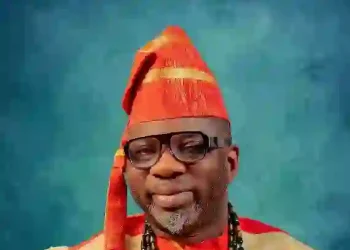
Gbenga Daniel was born on 6 April 1956 in Sagamu, Ogun State. As of 2026, he is 70 years old. He hails from a Yoruba family in Sagamu, though public records on his parents remain modest in detail, reflecting a private family background typical of many self made elites (ThisDay, 2026; Wikipedia, 2026c). His upbringing in a commercially vibrant town arguably influenced his entrepreneurial disposition. In contrast, Ibikunle Amosun was born on 25 January 1958 in Abeokuta, Ogun State, and is 68 years old as of 2026. He is of Egba origin, and his early life in Abeokuta placed him within one of the most politically conscious environments in the state. While details of his parents are not extensively documented in mainstream sources, his formative years explains a disciplined upbringing that later manifested in his structured approach to governance (Wikipedia, 2026a).
Moreover, Dapo Abiodun born on 29 May 1960 in Iperu Remo, Ogun State, and is 65 years old as of 2026. He is the son of Dr Emmanuel Abiodun, a respected teacher and community figure, whose influence is often cited in narratives about his upbringing. His background in Iperu Remo, a town known for producing prominent professionals, contributed to his early exposure to leadership ideals (Wikipedia, 2026b). Their shared origins within Ogun State, combined with similar generational experiences, created a natural basis for familiarity and eventual friendship. They were not strangers brought together by chance, but products of a common cultural and geographical environment.
Professions and Friendship
Before their entry into politics, the three men had established themselves in different professional spheres. Daniel built a successful career as an engineer and entrepreneur, founding Kresta Laurel, a prominent electro-mechanical firm (ThisDay, 2026). Amosun trained and practised as a chartered accountant, gaining experience in both private enterprise and public service, including a tenure in the Senate (Wikipedia, 2026a). Abiodun developed a strong profile in business and corporate leadership, positioning himself as a technocratic figure within political circles (Wikipedia, 2026b). Their friendship was rooted in this shared socio-economic status. They belonged to a class of professionals whose access to resources and networks created opportunities for political collaboration. Such proximity often fosters alliances that later translate into political partnerships, even if these relationships are eventually tested by ambition.
Party Politics and the Rise of Gbenga Daniel
When Gbenga Daniel declared his intention to contest as Governor of Ogun State in 2002, many political observers believed he stood no chance. His main opponent within the PDP was Omooba Doyin Okupe, who was a political protégé of Chief Kofo Oduguwa. It was widely observed that without the support of Senator Ibikunle Amosun, who was a serving senator at the time, Daniel’s emergence would not have been possible. The political ascent of Gbenga Daniel began with his election as governor in 2003 under the People’s Democratic Party (PDP). At the time, the party dominated the political landscape, and Daniel’s victory reinforced its influence in Ogun State (Wikipedia, 2026c). Gbenga Daniel defeated the incumbent, Chief Olusegun Osoba. It was a historic moment and the beginning of his political journey. He had been a non-political actor before this period. His administration consolidated political structures that would shape the state’s governance for years.
Not long after this, tensions emerged in his friendship with Ibikunle Amosun, who also wished to succeed him as governor. They had public confrontations and political battles. Daniel’s dominance within the party created friction, particularly among ambitious contemporaries such as Amosun. By the time Daniel was completing his second term as governor of Ogun State, he worked hard to install a trusted ally, Mr Gboyega Isiaka. This move faced strong resistance within the PDP. Consequently, he registered the Peoples Party of Nigeria (PPN) after leaving the People’s Democratic Party, primarily to support the governorship ambition of Gboyega Isiaka (widely known as GNI) in the 2011 Ogun State election.
The creation of the PPN was widely interpreted as Daniel’s strategic response to internal conflicts within the PDP, especially after he lost control of the party structure in the state. By establishing a new platform, he sought to retain political relevance and influence the succession process. Despite significant backing, the PPN and Isiaka were unable to secure victory, as Ibikunle Amosun emerged governor under the All Nigeria Peoples Party. The PPN could not secure second place as well, PDP came 2nd. I remember when the decision of following Gbenga Daniel came to scrutiny, my father a Chieftain of the ruling PDP at the time asked for my analysis on the matter before speaking with his followers. I presented a data to him on how PPN will not come second in the coming elections and how PDP too will be defeated using the present political realities on the time. I told father (Chief Kofo Oduguwa) who has been in politics since 1959, and one of the prominent Nigerians that formed PDP, to stay at home (within the PDP) and be defeated rather than been defeated in a Party that is largely a reactionary movement.
There were divergences of opinion within his political home. Some of his followers, including his most trusted wife, argued that Gbenga Daniel, being the incumbent, would use State power to enthrone the PPN. I argued otherwise, and my father stood firmly by my position. On the election day, even the incumbent governor was defeated in his polling unit by my father (Chief Kofo Oduguwa’s PDP). Although, Dr Doyin Okupe had argued during a meeting at Sir Kessington Adebukunola Adebutu’s (Baba Ijebu) house in Iperu that the PDP would not be defeated, citing my analysis, I retorted with authority that the division within the house, if not resolved, would lead to its political defeat. It did.By the end of the election, as predicted, the ANPP won with 377,487 votes, the PDP came second with 188,409 votes, and the PPN came third with 155,325 votes.
The Second Friend : Ibikunle Amosun
Senator Ibikunle Amosun’s political journey illustrates the role of persistence and strategic realignment. Initially operating within similar political networks as Daniel, he became increasingly dissatisfied with his subordinate position. His eventual departure from Daniel’s political orbit marked the beginning of a rivalry that would define Ogun State politics for years. By 2011, Amosun had secured the governorship under the All Nigeria People’s Party (ANPP), which later became part of the All Progressive Congress (APC). His victory was widely interpreted as both a personal triumph and a political upset.
The tenure of Ibikunle Amosun as governor of Ogun State was widely perceived as a period in which state power was deployed, at least in part, to challenge the legacy and influence of his predecessor, Gbenga Daniel. Shortly after assuming office in 2011, Amosun’s administration initiated a series of probes into projects and financial dealings undertaken during Daniel’s tenure. Panels of inquiry were established to investigate allegations of mismanagement and abuse of office, and these actions were extensively reported in the Nigerian press. In parallel, agencies such as the Economic and Financial Crimes Commission (EFCC) pursued cases linked to Daniel, reinforcing the perception that the new administration was intent on holding the former governor accountable. While officially framed as anti-corruption efforts, critics interpreted these moves as politically motivated, aimed at weakening Daniel’s enduring influence within Ogun State politics (Punch, 2026).
Beyond formal investigations, Amosun’s approach also showed a broader effort to dismantle Daniel’s political structures and symbolic presence in the state. Several projects and policies associated with Daniel’s administration were either reviewed, altered, or deprioritised, signalling a clear departure from the previous government. Political loyalists of Daniel reportedly lost access to state patronage networks, further eroding his foothold. Daniel himself later described the period as one in which he “went through hell,” a remark that captures both the intensity of the political confrontation and the personal dimension of their rivalry (Punch, 2026). Meanwhile, in a paradox characteristic of Nigerian politics, this phase of hostility eventually gave way to reconciliation, illustrating how even the sharpest conflicts among political elites can be tempered by time and mutual necessity.
The 3rd Friend: Dapo Abiodun
The rise of Dapo Abiodun adds another layer to this complex narrative. Like Amosun, he eventually emerged as governor under the All Progressive Congress in 2019 (Wikipedia, 2026b). His path to power was characterised by prolonged political engagement and strategic patience. It shocked most political observers that very unpopular Dapo Abiodun has emerged. Unlike the direct confrontation between Daniel and Amosun, Abiodun’s emergence was shaped by internal party dynamics and contests for influence. His victory again was orchestrated by internal fracture between the PDP, particularly through the help of Sen. Buruji Kashamu and Ibikunle Amosun was had divided the APC to formed APM.
The 2019 Ogun State governorship election cannot be fully understood without reference to the influential, if controversial, role played by Buruji Kashamu. As a dominant figure within the People’s Democratic Party in Ogun State, Kashamu controlled a substantial grassroots political structure. However, internal divisions within the party led to the emergence of parallel factions and weakened cohesion. Although the PDP presented Ladi Adebutu as its candidate, Kashamu’s strained relationship with other party leaders meant that the PDP vote was neither unified nor optimally mobilised. This fragmentation indirectly benefited Dapo Abiodun of the All Progressives Congress (APC), as the opposition failed to present a consolidated front.
At the same time, the role of Ibikunle Amosun introduced a further layer of complexity. As the outgoing governor, Amosun was dissatisfied with the emergence of Abiodun as the APC candidate and instead threw his weight behind Adekunle Akinlade. To actualise this, Amosun effectively backed the Allied Peoples Movement (APM), transforming it into a formidable electoral vehicle. Akinlade, running under APM, inherited much of Amosun’s political machinery, including loyalists, grassroots networks, and incumbency influence. This created an unusual scenario in which the ruling party was internally divided, with its sitting governor supporting a rival platform against his own party’s candidate.
The election results showed fragmentation of political forces. Dapo Abiodun of the APC secured approximately 241,670 votes, emerging as governor. Adekunle Akinlade of the APM followed closely with about 222,153 votes, while the PDP candidate, Ladi Adebutu, trailed behind. The closeness of the contest underscored the strength of Amosun’s support base and the effectiveness of the APM as a temporary political platform. However, the split in votes between APM and PDP ultimately worked in favour of Abiodun, allowing him to secure victory without an overwhelming majority.
In effect, both Kashamu’s influence within the PDP and Amosun’s strategic deployment of the APM contributed to the outcome, albeit in different ways. Kashamu’s inability to unify the PDP weakened the opposition, while Amosun’s rebellion against the APC created a divided electoral field. The paradox is striking: Amosun’s efforts to install his preferred successor through APM nearly succeeded, yet they inadvertently ensured the victory of Abiodun by fragmenting the vote further. Thus, the 2019 election stands as a classic example of how internal party conflicts and elite rivalries can decisively shape electoral outcomes in Nigerian politics.
Return of the Three Friends
An important dimension of this narrative lies in the shifting party affiliations of the three men before their eventual convergence within the APC. Gbenga Daniel began his political career in the People’s Democratic Party. He later aligned with the Labour Party before eventually joining the APC. In contrast, Ibikunle Amosun moved through the All Nigeria People’s Party, which later merged into the APC, where he has remained a central figure despite internal disagreements. Meanwhile, Dapo Abiodun was associated at different times with the People’s Democratic Party and the Action Congress of Nigeria before consolidating his position within the APC.
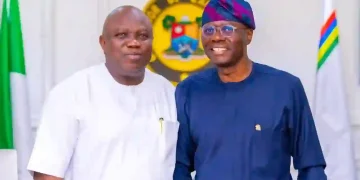
In a striking illustration of political convergence, the three men were reportedly spotted together at an APC leaders meeting just yesterday (13.04.2026). Their joint appearance symbolises a return to shared political space after years of rivalry and divergence, reinforcing the notion that political relationships are often cyclical rather than linear. Despite periods of intense political rivalry, the relationships among the three men have shown a capacity for reconciliation. Public statements in later years indicate efforts to rebuild ties. Daniel’s remark that “we thank God” in reference to reconciliation explaining a cultural inclination towards restoring relationships (Punch, 2026). Their coming together symbolises wisdom. Succession tussle always means political defeat, Dapo Abiodun, agreed with others to present a common front in Sen. Olamilekan Yayi for the next governorship election.
Several key factors explain how these three men, once friends, each became governor in succession (from the oldest to the youngest).Their shared origins within Ogun State created an early bond. Their professional success provided the resources and networks necessary for political engagement. Their persistence ensured that setbacks did not prevent eventual success. Their movement across political parties allowed them to adapt to changing circumstances. Finally, their familiarity with one another fostered both rivalry and strategic awareness.
Conclusion
The story of OGD, Amosun and Dapo explained the complex interplay between friendship and ambition. Their shared beginnings in Ogun State, similar generational experiences, and professional achievements created the foundation for their relationship. Moreover, ambition transformed that friendship into rivalry, only for pragmatism to later restore a measure of unity. Their journey suggests that friendship with individuals of shared vision and capacity can be advantageous, even if it becomes contested. What favoured their friendship was a convergence of background, opportunity, and aspiration. What sustained their success was their resilience and adaptability. Their story is not simply about three governors. It is about the enduring tension between loyalty and ambition.
References
Freedom Online (2025) Gbenga Daniel vs Dapo Abiodun: The Real Story Untold.



Punch (2026) I went through hell under Amosun, Daniel says.
ThisDay (2026) Tinubu pays tribute to Gbenga Daniel at 70.
Wikipedia (2026a) Ibikunle Amosun.
Wikipedia (2026b) Dapo Abiodun.
Wikipedia (2026c) Gbenga Daniel.
Wikipedia (2026d) Labour Party (Nigeria).
Wikipedia (2026e) Action Congress of Nigeria.
READ ALSO:
- NSCDC Boss, Audi Abubakar Constitues High-Powered Probe Into Deaths of Suspected Illegal Miners in Niger State
- Sanusi Warns Investors Against Using School Fees, Homes To Buy Dangote Shares
- King Charles warns tech leaders over dangerous misuse of AI
- Guinea suspends France 24 broadcast over comments about president
- South African Woman Sentenced to 25 Years for Heroin Trafficking in Nigeria