









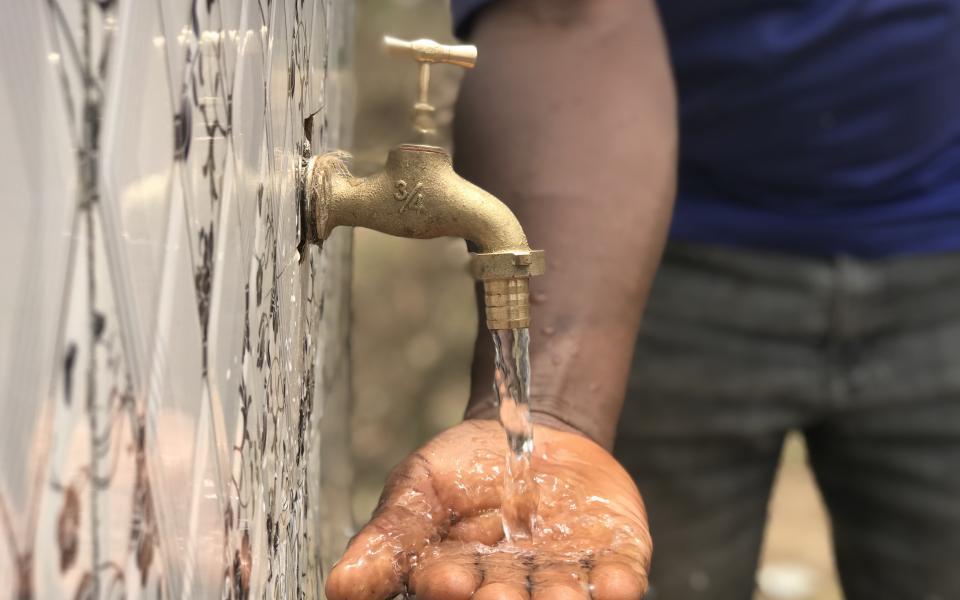
A newly announced pilot scheme by the Lagos State Water Corporation (LWC) to expand water access through a Public-Private Partnership (PPP) has drawn mixed reactions from residents, balancing hopes for a reliable supply against concerns over affordability and corporate exploitation.
The initiative, disclosed in separate interviews with the News Agency of Nigeria (NAN), is a key part of the state government’s strategy to meet the growing demand for potable water for its over 22 million residents and reduce dependence on often unsafe alternatives like boreholes, water tankers, and sachet water.
While some citizens welcomed the move as a potential solution to the chronic water shortage, others voiced strong apprehensions, drawing parallels to past experiences with cost escalations in other utility sectors.



Ese Brume, a resident of Lekki, acknowledged the initiative’s potential but questioned its execution. “Access to potable water is necessary for the well-being of the residents. However, if it comes at a cost, can Lagosians afford it? And will the service be sustainable?” she asked.
Echoing concerns over cost, Mrs. Florence Ogbu, an entrepreneur in Jakande Estate, Isolo, described the plan as “commendable” but warned it “must not worsen the economic burden of residents already grappling with high utility bills.”
Legal practitioner Henry Adeboye from Okota pointed to the waste management sector as a cautionary tale, urging the government to establish a multi-stakeholder monitoring committee to ensure transparency and prevent exploitation.
Opposition was more direct from some quarters. Bright Okwuchukwu, a trader in Surulere, called it a “wrong move,” warning that inviting private investors would lead to full privatisation and higher bills. “It will not solve the potable water deficit challenge,” he stated.
This sentiment is shared by a coalition of six Civil Society Organisations (CSOs), including the Resilience Development Initiative and the Environmental Defenders Network, which have petitioned the Lagos State House of Assembly against what they call a “veiled attempt at water privatisation.”
However, the initiative also found strong support. Residents Nkechi Abbe of Alagbado and Obiageli Ogbolu of FESTAC described it as “laudable” and potentially life-saving, citing a reduction in waterborne diseases and indiscriminate borehole drilling.
Vivian Emesowum, Executive Director of an NGO, the Grassroots People and Gender Development Centre, supported private sector involvement for its efficiency but stressed that the government must retain ownership of water resources. “We cannot exchange a water crisis for an affordability crisis,” Emesowum cautioned.
Weighing in on the policy, the Country Director of WaterAid Nigeria, Ms. Evelyn Mere, argued that water must be treated as both a social and economic good. “Without proper financing, infrastructure will collapse. Privatising water supply will attract the resources needed to sustain the system,” she said, while emphasising the need for inclusion strategies to protect low-income households.
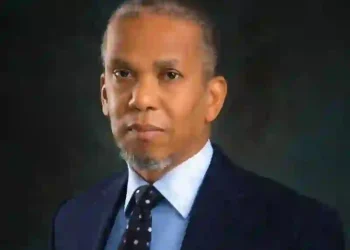
In response to the growing debate, the Managing Director of LWC, Mr. Mukhtaar Tijani, sought to clarify the government’s position. He stated that the PPP initiative is not a privatisation of the water system but a collaborative model to attract private investment and technical expertise.
“The state government will retain regulatory oversight to ensure fairness. This is not the transfer of ownership to private hands, but a partnership to deliver sustainable water services to over 22 million Lagosians,” Tijani stated, adding that recent stakeholders’ engagements were open and inclusive.
The pilot project looks set to remain a focal point of public discourse as Lagos State grapples with the immense challenge of providing a basic human necessity to its vast population.

Seunmanuel Faleye is a brand and communications strategist. He is a covert writer and an overt creative head. He publishes Apple’s Bite International Magazine.