




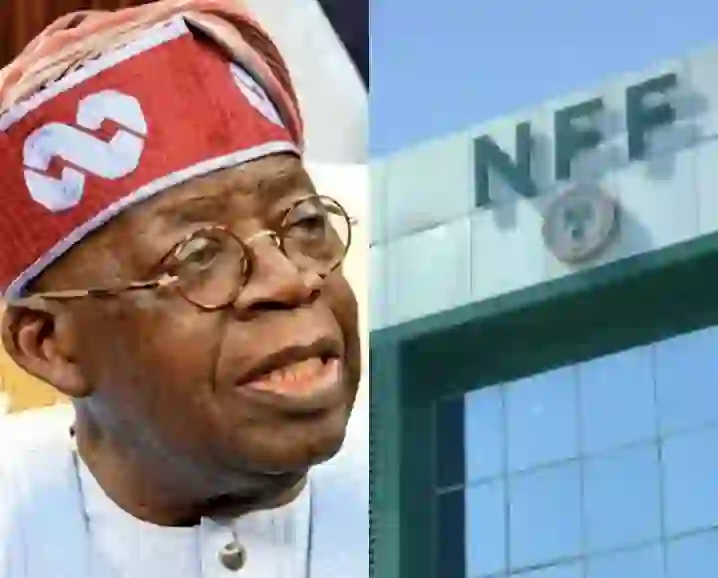
Football stakeholders and former players have called on President Bola Tinubu to spearhead sweeping reforms in Nigeria’s football administration, arguing that the country’s continued decline on the international stage is the result of poor governance and a lack of accountability within the Nigeria Football Federation (NFF).
The call comes amid growing criticism following Nigeria’s failure to qualify for the FIFA World Cup for the second consecutive edition, a situation many believe should have triggered major leadership changes within the country’s football governing body.
Across the world, governments and football authorities have responded decisively to disappointing World Cup performances by making immediate administrative changes. However, critics say Nigeria has failed to hold football administrators accountable despite missing both the 2022 and 2026 World Cups.
Several countries have acted swiftly after disappointing campaigns at the 2026 FIFA World Cup.
In Côte d’Ivoire, the president of the country’s football federation resigned shortly after the team’s Round of 16 exit.
Senegal dismissed head coach Pape Thiaw after the nation’s elimination in the Round of 32, with the Senegal Football Federation explaining that the decision followed a comprehensive review of the team’s performance and future prospects.
Algeria also relieved Vladimir Petković of his duties after the team’s World Cup exit, while Tunisia sacked coach Sabri Lamouchi following a humiliating 5-1 defeat to Sweden before appointing experienced French manager Hervé Renard as his replacement.



Portugal’s Roberto Martínez resigned immediately after the country’s elimination, stating there was no reason to remain in charge without achieving the ultimate objective of winning the tournament. The Portuguese Football Federation quickly appointed veteran coach Jorge Jesus to begin preparations for future competitions.
Similar administrative shake-ups were witnessed in Uruguay and Austria, reinforcing what many describe as a global culture of accountability in football management.
Unlike these countries, Nigeria has witnessed no resignations or significant restructuring within the NFF despite consecutive World Cup qualification failures.
Instead, the federation is preparing for its elective congress scheduled for September 26, 2026, in Lafia, Nasarawa State.
The NFF has already amended its statutes, constituted a 12-member Electoral Committee, and passed a vote of confidence on the executive committee led by Ibrahim Musa Gusau.
Critics argue that rewarding an administration under which Nigeria failed to qualify for two consecutive World Cups sends the wrong message and reflects a culture of mediocrity.
Several respected figures in Nigerian and international football have openly criticized the current administration.
Former Super Eagles captain John Obi Mikel described Nigeria’s back-to-back World Cup absence as a “disaster” and urged the leadership of the NFF to step aside.
Former Green Eagles captain Segun Odegbami has repeatedly accused a small group of individuals of dominating Nigerian football administration and frustrating meaningful progress.
Sports journalist Tana Ayejina questioned what value the current administrators still have to offer after years of disappointing results.
Former international Efe Sodje blamed poor administration and structural deficiencies for Nigeria’s inability to maximize its enormous football talent.
Former Super Eagles striker Odion Ighalo also insisted responsibility should not be placed solely on players, arguing that leadership decisions and administrative structures played a major role in Nigeria’s failure to qualify.
Former Chelsea and England defender John Terry, who played alongside Mikel Obi, also lamented Nigeria’s absence from the World Cup, describing it as a significant loss to the global tournament because of the country’s rich football tradition.
Beyond poor results on the pitch, concerns have also been raised about the electoral process within the NFF.
Odegbami has threatened legal action to stop the September elections, alleging that the current electoral system unfairly concentrates voting power in the hands of state Football Association chairmen rather than broader football stakeholders.
According to him, meaningful reforms can only occur if the electoral process becomes more transparent and representative.
Many football stakeholders believe the Federal Government, led by President Tinubu, should take a more active interest in ensuring transparency, accountability and good governance within Nigerian football.
They argue that football remains one of the few institutions capable of uniting Nigerians across ethnic, religious and political divides, making its decline a matter of national importance.
Observers note that while countries with far smaller populations continue to compete successfully on the global stage, Nigeria’s enormous football potential remains unrealized due to persistent administrative challenges.
As preparations begin for another NFF election, stakeholders insist genuine reforms—not recycled promises—are needed if Nigeria hopes to restore its place among football’s elite and qualify for future World Cups.
READ ALSO:
- Zacch Adedeji: When Academic Brilliance Runs Ahead of Judgment | By Olawale Olaleye.
- Messi Returns to Inter Miami Days After Father’s Burial
- PENGASSAN: Poverty Must Be Tackled To Reduce Insecurity In Nigeria
- Rufai Oseni Questions Fadahunsi’s AI Explanation Over Viral Video
- Femi Kuti Says Judiciary, Not Tinubu, Is Nigeria’s Biggest Problem