










Crude oil prices slipped on Monday after signs of progress emerged from negotiations between the United States and Iran, raising hopes of reduced tensions in the Middle East and easing fears of disruptions to global energy supplies.
The decline followed an announcement by international mediators that both countries had agreed on a framework aimed at reaching a comprehensive agreement, boosting investor confidence and reducing concerns over instability around the Strait of Hormuz, one of the world’s most critical oil transit routes.
During Asian trading hours, benchmark oil contracts moved lower. Brent crude dropped by more than one per cent to $79.19 per barrel, while US West Texas Intermediate (WTI) crude fell 0.6 per cent to $75.37 per barrel.


The diplomatic discussions, which were originally scheduled for Friday, had been delayed due to escalating hostilities involving Israel and Hezbollah. Talks eventually commenced on Sunday in Switzerland, led by US Vice President JD Vance and Iranian official Mohammad Bagher Ghalibaf.
Market uncertainty had intensified earlier after reports suggested Iran might withdraw from the negotiations following warnings from US President Donald Trump about possible additional military action if Hezbollah continued attacks against Israel.
However, mediators from Pakistan and Qatar later confirmed that the talks proceeded in what they described as a “positive and constructive atmosphere.”
Investor sentiment improved further after both mediators announced meaningful progress in discussions focused on Iran’s nuclear programme and measures to restore stability around the Strait of Hormuz.
According to a joint statement, Washington and Tehran agreed to establish a direct communication channel aimed at preventing incidents in the strategic waterway.
The mediators also revealed that a high-level committee had approved a roadmap intended to secure a final agreement within 60 days, paving the way for immediate technical-level negotiations.
Adding to the optimism, Iranian Foreign Minister Abbas Araghchi stated on social media platform X that mediation efforts had achieved significant progress toward ending the conflict involving Lebanon.
While energy markets reacted positively to the diplomatic developments, stock markets across Asia delivered mixed performances.
Technology shares helped drive gains in Tokyo, Seoul and Taipei, while markets in Shanghai, Mumbai and Bangkok also finished higher. In contrast, investors in Hong Kong, Sydney, Singapore, Wellington, Manila and Jakarta remained cautious, resulting in declines.
European markets opened on a positive note, with London, Paris and Frankfurt recording modest gains.
Analysts noted that despite encouraging developments, investors remain wary of the fragile security situation in the Middle East.
Skye Masters of National Australia Bank said markets were likely to begin the week cautiously, noting that uncertainty in the region could still influence currency and commodity movements.
According to Masters, the US dollar is expected to remain relatively strong, while oil prices could continue to fluctuate depending on geopolitical developments.
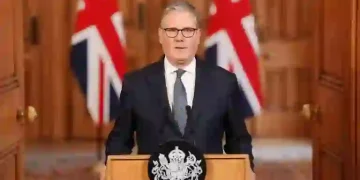
Meanwhile, the British pound remained under pressure following last week’s by-election victory by Labour politician Andy Burnham. The result fuelled speculation that Burnham could emerge as a potential successor to Prime Minister Keir Starmer amid growing dissatisfaction within the Labour Party.
Reports indicated that investors were increasingly concerned that any future leadership change could bring additional government spending plans, potentially worsening the United Kingdom’s already significant debt burden.
Key Market Performance
- Tokyo’s Nikkei 225 gained 1.6 per cent to close at 72,353.96.
- Hong Kong’s Hang Seng Index fell 0.4 per cent to 23,822.25.
- Shanghai Composite Index advanced 1.8 per cent to 4,163.10.
- Seoul’s Kospi rose 0.7 per cent to 9,114.55.
- London’s FTSE 100 edged up 0.1 per cent to 10,368.72.
Currency Market Update
- The euro weakened to $1.1457 from $1.1464.
- The British pound slipped to $1.3210 from $1.3218.
- The US dollar strengthened to 161.72 yen from 161.27 yen.
- The euro eased slightly to 86.72 pence from 86.73 pence.
The progress in US-Iran negotiations has provided temporary relief to global markets, though investors continue to monitor developments closely as geopolitical risks in the Middle East remain unresolved.
READ ALSO:
- Oil Prices Decline as Progress in US-Iran Talks Eases Market Concerns
- Starmer Resigns as UK Prime Minister
- APC Dominates Ekiti, Wins Five Bye-Elections as PDP Takes Rivers Seat
- GehGeh Criticises Peller’s Marriage to Jarvis, Says TikTok Star Is Too Young for Such Commitment
- Troops Tighten Siege On Oyo School Kidnappers As Rescue Efforts Gain Momentum