







It was the kind of email that editors dread, yet cannot ignore. In February 2026, a message dropped in the inbox of Apples Bite Magazine from a woman named Adebisi, writing from Abuja, Nigeria. She had come across our January report on African men lured to Russia under false pretences and conscripted into the Russian Army. The man in our story, she wrote, was her in-law.
Her email was brief. “My name is Adebisi,” she wrote, “and I am based in Abuja, Nigeria. I came across a report you posted regarding a Nigerian mechanic who was reportedly lured to Russia for a construction job but was later recruited into the Russian Army to fight in the Ukraine conflict. The individual mentioned, Bankole Mathew, is my in-law. I am reaching out to kindly request any additional information you may have concerning his current location, condition, and well-being. I would also appreciate any guidance or assistance you can offer regarding the possibility of his repatriation back to Nigeria. Thank you very much for your time and consideration.”
It was a model of quiet dignity in impossible circumstances. It was also precise in one detail that stopped our editors: a construction job. Not security work, a construction job. Bankole Mathew had been lured to Russia under yet another variant of the same script that Russian recruiters tailor endlessly to their targets, changing the job title while keeping the destination and the deception identical.
“The individual mentioned, Bankole Mathew, is my in-law. I am reaching out to request any information you may have on his well-being and the possibility of his repatriation.”
Adebisi, writing to Apples Bite Magazine
Adebisi had done everything right. She had searched for information, found a credible report, identified her in-law within it, and written a dignified letter to the only people who seemed to be paying attention. The state, in every form available to her, had given the family nothing. Her appeal sits at the heart of a scandal now spreading across African governments, Russian diplomatic offices, and the growing ranks of families left to search for answers on their own.
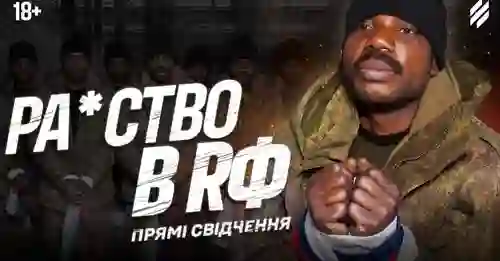
Bankole Mathew is not alone. He is one face in an expanding gallery of young African men, mechanics, security guards, drivers, labourers, who set out in search of economic survival and found themselves handed a rifle and pushed toward the frontlines of Russia’s war in Ukraine. His story is the story of economic despair turned into a military resource. A continent’s unemployment crisis, harvested systematically and cynically by a machine that has learned to identify vulnerability from thousands of miles away.
And it is, increasingly, a story that Africa’s own leaders appear in no great hurry to tell.
The Wagner Group’s African Empire
To understand how Bankole Mathew ended up on a Ukrainian battlefield, it is necessary to understand the organisation that put him there, and its long, bloody, profitable relationship with Africa.
The Wagner Group, a private military company founded by the late oligarch Yevgeny Prigozhin and operating as an extension of Russian state power, spent the better part of a decade building an infrastructure of influence across sub-Saharan Africa. From Mali to the Central African Republic, from Libya to Sudan, Wagner operatives embedded themselves in failing states, trading military muscle, political protection, and mineral extraction for Russian geopolitical leverage and personal enrichment.
Prigozhin’s death in a mysterious plane crash in August 2023, just months after his ill-fated mutiny against the Russian military establishment, did not dismantle the machine he had built. It transferred its ownership. By late 2023, the Kremlin had folded much of Wagner’s African operations into a new entity: the Africa Corps, a structure under direct Russian military command that retained Wagner’s existing networks of fixers, handlers, and African intermediaries wholesale.
Prigozhin’s death did not kill the machine. It merely changed who owned it.
It is the Africa Corps, and the Wagner infrastructure it inherited that investigators, journalists, and Ukrainian intelligence analysts now link directly to the recruitment of African nationals for combat in Ukraine. The pipeline is sophisticated, deniable, and growing.
How the Recruitment Works
The recruitment of African men into the Russian military does not begin with a uniform or a declaration of war. It begins, almost always, with a job offer.
The pattern, documented by the All Eyes On Wagner (AEOW) and corroborated by testimony from survivors, is consistent and deliberate. Recruiters operating through WhatsApp groups, Telegram channels, and local intermediaries target men in countries with high youth unemployment. They offer positions in security, logistics, or civilian support. They promise monthly salaries, between $1,500 and $3,000, that would be transformative by Nigerian standards. Signing bonuses. In some cases, fast-tracked Russian citizenship.
What they do not offer is the truth.
Recruits, including Nigerians Abubakar Adamu, Hamzat Kazeem Kolawole, and Mbah Stephen Udoka, all identified in AEOW’s database of 1,417 African nationals recruited since 2022, travelled to Russia on tourist visas expecting civilian employment. Upon arrival, their documents were confiscated. Contracts were placed before them in Russian, a language the vast majority could not read. They were told to sign. Some did not know what they were agreeing to. Others were coerced into signing regardless.
Documents confiscated. Contracts in Russian. The men were told to sign. They did not know what they were agreeing to.
Within days or weeks, the men were in military facilities receiving cursory training before deployment to eastern Ukraine. African recruits were frequently assigned to assault units, used, in the testimony of multiple sources, as cannon fodder: placed in high-risk positions where casualty rates are highest and where Russian commanders showed little interest in limiting losses.
The statistics are damning. Of the 1,417 Africans identified in AEOW’s database, 316 have been confirmed killed in action. At least five Nigerians have been confirmed dead, including two killed in Luhansk oblast in drone strikes. Investigators warn the actual toll is far higher, the database, compiled from Ukrainian intelligence, is acknowledged to be incomplete, and AEOW researchers identified African men posting from the frontlines who did not appear in it at all.
The Shell Companies
The apparatus through which these men are identified and processed is deliberately fragmented, designed to insulate Russian state actors from accountability.
Some recruitment agencies operating in Africa are directly accredited by Russian authorities, according to the AEOW report. Others work through Russian nationals contracted by those same authorities. A third category operates at arm’s length from the Russian state while serving its ends, perhaps the most insidious arrangement of the three.
AEOW investigators documented one revealing case involving Boris Alexandrovich Malikov, a Russian national, posting offers to join the Russian army on Kenyan WhatsApp groups. Posing as a potential recruit, investigators engaged him directly. Malikov operated through a shell company called OneClickVisa and claimed, remarkably, to be acting on behalf of the Russian Federal Security Service, the FSB.
Investigators were sceptical, and the evidence supported their scepticism. Malikov had been seeking employment himself as recently as May 2025. The OneClickVisa website, which he claimed had operated for over a decade, had been registered only in January 2026. The organisation existed largely on paper: a thin veneer of legitimacy over a recruiting operation serving Russian military interests from a distance convenient enough to deny.
Russia has since begun restricting recruitment from a number of what it calls “friendly” nations. A blacklist of 36 countries, spanning Africa, the Arab world, and nations including China, India, and Brazil, has circulated among recruiters following diplomatic pressure and mounting reports of deception. Nepal, India, Sri Lanka, and Kenya have formally demanded that Russia halt recruitment of their citizens. South Africa announced in December 2025 that it had dismantled a connected trafficking network.
Africa’s Willing Helpers
Perhaps the most troubling dimension of the recruitment architecture is the role played by Africans themselves, men and women who have embraced the Russian cause and advocate, often openly, for others to join it.
Russian state media and soft power operations have, over the past decade, cultivated a layer of pro-Kremlin sentiment across Africa. It draws on genuine grievances, anti-Western resentment, frustration with colonial legacies, anger at the perceived double standards of European foreign policy, and channels them toward a worldview sympathetic to Russian strategic interests. The sentiment is real. Its exploitation is cynical.
The AEOW report documented how this network functions in recruitment. African nationals who have served in the Russian armed forces, or who have absorbed the Russian state narrative on Ukraine, are mobilised to advocate online for others to follow. They post testimonials, sometimes authentic, sometimes scripted, describing their experiences favourably. They serve as local contact points for recruits who are suspicious of foreign recruiters but more trusting of someone from their own community.
Local Africans sympathetic to the Russian cause serve as the most trusted node in a deeply distrustworthy recruitment machine.
Beyond online advocacy, the AEOW report documented the practice of forcibly recruiting illegal immigrants intercepted within Russia. Men found without valid documentation, having arrived through irregular migration routes, are offered a binary choice: deportation or a military contract. For men who have spent considerable money and effort reaching Russia and face dire circumstances at home, the choice is not freely made.
It is a strategy that exploits vulnerability at every turn: economic desperation in Africa, irregular status in Russia, and the coercive leverage of confiscated documents and threatened deportation.
Russia’s Non-Denial
Russia’s official response to the mounting evidence has been, in a word, deflection. When The Guardian Nigeria published articles on February 18, 2026, touching on fraudulent recruitment of Nigerians, including alleged appeals from the Nigerian organisation “Professionals for Peace” addressed to the Embassy, the Russian Embassy in Abuja issued a formal response. It was a masterclass in misdirection.
The Embassy acknowledged the articles directly but moved quickly to reframe the issue. “We reaffirm that the Russian Federation operates no official or state-run programme aimed at recruiting citizens of Nigeria,” it stated, adding that the Embassy possessed “no information about the existence of any fraudulent schemes or criminal networks that lure Nigerian nationals into combat roles.” On its face, this was a denial. On examination, it was something more carefully constructed: the Russian state was not denying that Nigerians had ended up in combat, only that it knew nothing about how they got there.
The Embassy’s response then performed a pointed pivot. It noted that some individuals had travelled to Russia on tourist visas while intending to seek work, “in one case as an engineer, in another as a security guard”, and described this as “an attempt to violate Russian law,” since tourist visas do not permit employment. In doing so, the Embassy recast the victims as the offenders: the Nigerian men who had been deceived into signing military contracts were, in this telling, simply workers who had broken immigration rules. It further noted that the Embassy “did not issue visas to the individuals named Balogun Adisa Ridwan and Abubakar Adamu”, a technical denial that said nothing about how those men arrived, what happened to them after arrival, or who was responsible for what followed.
The Embassy concluded by directing all responsibility elsewhere. Issues concerning Nigerian nationals in Russia, it stated, were “within the competence of the Embassy of Nigeria in Moscow.” Any fraudulent recruitment happening on Nigerian soil should be referred to “the competent law enforcement authorities of Nigeria.” Russia, in other words, was not the problem. Nigeria was. The recruits were at fault. Their government should sort it out. The response said nothing about the documented deaths, nothing about the confiscated documents, nothing about the Russian-language contracts. It offered, instead, a bureaucratic handoff and a lecture on visa regulations.
Nigeria’s Response
The Nigerian Ministry of Foreign Affairs released a statement in February 2026. It appeared not at a press conference, not before the National Assembly, not in a formal diplomatic démarche to Russia, but on the Ministry’s official Facebook page.
The statement, titled “Federal Government Warns Against Illegal Recruitment of Nigerian Citizens Into Foreign Armed Conflicts,” acknowledged that Nigerians had been “allegedly recruited under false pretences” for deployment to combat zones. It warned citizens against participating in foreign conflicts. It directed Nigerian Missions abroad to “strengthen consular vigilance.”
It said nothing about sanctions. It demanded nothing of Russia. It named no investigation lead, set no timeline, and confirmed no forced conscription. It offered the families of the dead and missing, families like Bankole Mathew’s, a carefully worded Facebook post.
The Nigerian government’s response to the deaths of its citizens appeared not at a press conference or before the National Assembly, but on a Facebook page.
The Ministry’s own language acknowledged the stakes: “The Federal Government of Nigeria unequivocally warns all citizens against engaging in or accepting any offer that involves participation in foreign armed conflicts. Such actions not only endanger lives but may also violate Nigerian and international laws governing mercenary activities and foreign enlistment.”
This is boilerplate. It places the burden of protection on potential victims rather than on the state structures that have failed to disrupt recruitment networks. Given five confirmed Nigerian deaths, over 36 documented cases of deceptive recruitment, and mounting evidence of state-linked Russian entities targeting Nigerian citizens, one might reasonably have expected: the summoning of the Russian ambassador, a formal demand for the return of detained nationals, the activation of bilateral consular frameworks, or emergency legislation criminalising facilitation of such recruitment. None of this has occurred.



The African Union’s Silence
One might have hoped that the African Union would provide the institutional response that individual governments have declined to offer. It did not.
The AU’s 39th Ordinary Session of the Assembly of Heads of State, which convened in Addis Ababa in February, carried a primary theme formally adopted and circulated among member states: “Assuring Sustainable Water Availability and Safe Sanitation Systems to Achieve the Goals of Agenda 2063.”
Water security is a genuine and serious concern. But the theme also served, intentionally or not, as a buffer against more uncomfortable discussions, the kind that would require African heads of state to confront, directly and collectively, the fact that a foreign power is systematically hunting their citizens, deceiving them with false job offers, and sending them to die in a European war.
The AU convened in February. Its theme was water and sanitation. The recruitment of African men into a foreign army was not on the agenda.
Apples Bite Magazine can confirm, following direct inquiries to the Nigerian Ministry of Foreign Affairs, that the issue of Russian recruitment and the conscription of African men was not raised and was not formally tabled at the summit. The Ministry confirmed the matter did not feature in the confirmed agenda. It was not raised from the floor by Nigeria or any other known state delegation.
This is a failure of continental solidarity that deserves to be named plainly. The African Union exists, in part, to respond collectively to threats against African citizens. Over 1,400 African men have been recruited into a foreign war. Hundreds are dead. Their families in Lagos, Nairobi, Accra, and Yaoundé are writing emails to magazines because no institution has given them anything else to do. The heads of state discussed sanitation.
Why Young Men Keep Saying Yes
It would be wrong to reduce this crisis to Russian cynicism alone. The pipeline works because something else has already failed.
Nigeria’s youth unemployment rate hovers above 40 percent in some estimates, with the broader underemployment figure higher still. A mechanic like Bankole Mathew, skilled and hardworking, could spend years in Lagos without earning enough to meet his family’s basic needs. When a message arrives on his phone promising $2,000 a month for construction or security work abroad, more than most Nigerians earn in six months, the rational calculation is not as clear-cut as those of us with stable incomes might wish it to be.
The AEOW database charts the trajectory with uncomfortable clarity: 177 documented African recruits in 2023, 592 in 2024, 647 in 2025. Citizens from countries now on Russia’s own blacklist accounted for 37 percent of all foreign mercenaries recruited by autumn 2025. Ghana, Cameroon, and Kenya were the most active recruitment targets on the continent outside the Eurasian Economic Union states.
These numbers track, with uncomfortable precision, the geography of African economic distress. Recruitment is heaviest where unemployment is highest, where governance is weakest, and where young men have the fewest reasons to believe the state will protect them.
The numbers track the geography of African economic distress with uncomfortable precision. Recruitment is heaviest where hope is thinnest.
This does not excuse the recruiters, the fixers, the Russian military planners, or the African politicians who have watched and said little. But genuine solutions require more than a Facebook statement. They require governments to treat the economic conditions producing this vulnerability as the security crisis that, demonstrably, they have become.
The evidence gathered by Apples Bite Magazine, AEOW, Ukrainian intelligence, and a growing body of investigative reporting points in one direction: this is not a series of isolated incidents. It is a coordinated, escalating campaign by Russian military networks, operating under various guises but with consistent methods and consistent victims, to harvest African economic despair for military gain.
The Wagner Group built the networks. Africa Corps inherited them. Shell companies like OneClickVisa provide cover. Local pro-Russian sympathisers provide trust. Economic desperation provides the recruits. And the silence of African governments provides the impunity.
It is 2026. Over 316 Africans have been confirmed killed fighting a war they were lied into. Hundreds more are unaccounted for. Families are writing to magazines. Governments are posting on Facebook. The African Union discussed sanitation.
Something has gone very wrong. And the question hanging over every foreign ministry in Abuja, Nairobi, and Accra, over every government that has received reports of this practice and responded with silence or a statement, is a simple one:
How many more Bankole Mathews will it take?

Seunmanuel Faleye is a brand and communications strategist. He is a covert writer and an overt creative head. He publishes Apple’s Bite International Magazine.