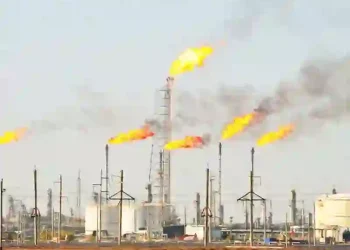









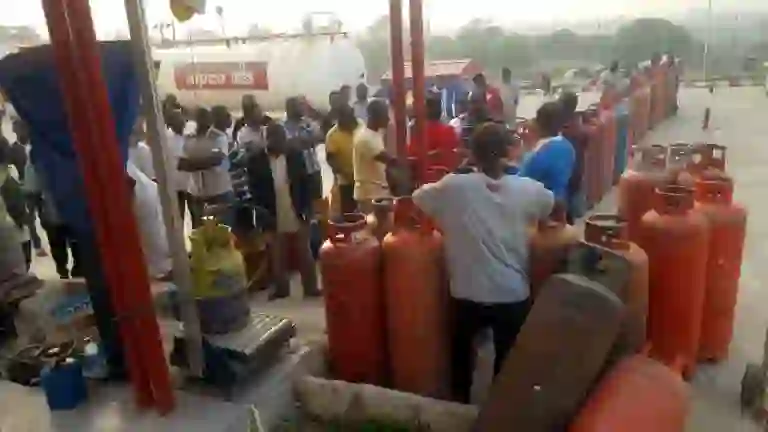
Nigeria, despite being one of Africa’s biggest holders of natural gas reserves, is grappling with a worsening shortage of Liquefied Petroleum Gas (LPG), commonly used as cooking gas. The shortage has continued to drive up prices and strain households and small businesses across the country.
New data from the Nigerian Upstream Petroleum Regulatory Commission shows that in the first two months of the year, about 62% of Nigeria’s gas output was exported, while only 38% was retained for domestic use. Industry experts say this export-heavy structure, originally designed when local demand was low, can no longer meet current consumption needs.
A recent industry report, Nigeria LPG Production & Supply Matrix (2023–2026), revealed that national LPG consumption rose by about 20% to 1.8 million metric tonnes in 2026, up from 1.5 million metric tonnes in 2023. However, supply is estimated at between 1.55 million and 1.65 million metric tonnes, creating a clear shortfall.

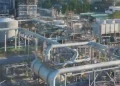
Although local production has improved through contributions from facilities such as the Dangote Refinery, Nigeria LNG, and several gas processing plants, the growth in demand has continued to outpace supply.
The imbalance has pushed retail prices sharply higher. In many parts of the country, cooking gas now sells between ₦1,700 and ₦2,000 per kilogram, compared to about ₦1,100 earlier in the year.
Stakeholders attribute the crisis to multiple structural challenges, including weak gas infrastructure, export prioritisation, insecurity, pipeline vandalism, limited storage capacity, and regulatory bottlenecks. Industry sources also note that many producers prefer export markets due to higher and more stable foreign exchange returns.
The Nigerian Association of Liquefied Petroleum Gas Marketers has warned that the situation is worsening hardship for millions of Nigerians. Its leaders, including Edu Inyang and Bassey Essien, said rising depot prices and supply shortages are making LPG increasingly unaffordable for households, food vendors, and small businesses.
They also cautioned that more families are turning to firewood and charcoal as alternatives, reversing earlier progress in clean energy adoption.
Further concerns were raised by the Oil and Gas Service Providers Association of Nigeria, whose president, Colman Obasi, said the country’s infrastructure gaps, insecurity, foreign exchange volatility, and regulatory challenges would take years to resolve. He warned that Nigeria could continue to face periodic shortages despite its vast gas reserves without significant investment in processing, storage, and distribution systems.
Meanwhile, data from the National Bureau of Statistics shows that cooking gas prices have risen by about 335% over the past decade, increasing from roughly ₦400 per kilogram in 2016 to about ₦1,741 in 2026.
Analysts say the outlook remains uncertain, with no immediate relief in sight unless structural reforms and infrastructure expansion are urgently implemented across the gas value chain.
READ ALSO:
- Terrorists Exploit Crowdfunding Networks to Raise Funds — NFIU
- Obi Rejects Atiku’s Plan To Restore Fuel Subsidy
- Five Feared Dead as Rival Political Thugs Clash in Osun
- US Begins Advanced Military Training for Nigerian Troops in Bauchi
- APC Chieftain: Tinubu Has Performed Better Than Previous Elected Presidents