








Nigeria’s crude oil and condensate production has surged by roughly 80 per cent since May 2023, with the security of the Trans Niger Pipeline (TNP), one of the country’s key crude evacuation routes, playing a central role in the rebound. Pipeline Infrastructure Nigeria Limited (PINL), the wholly Nigerian-owned company responsible for managing the corridor, reported zero infractions on the line during its May stakeholder engagement.
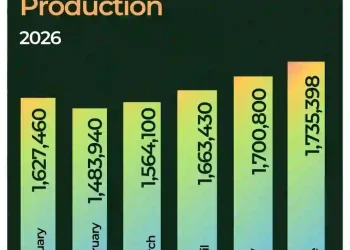
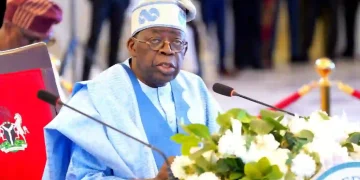
Minister of State for Petroleum Resources (Oil), Heineken Lokpobiri, announced the production figures at the Petroleum Ministry’s retreat in Abuja. He said output, which stood at around one million barrels per day (bpd) when the current administration took office in 2023, has climbed to approximately 1.8 million bpd. “Today, we are doing approximately 1.8 million bpd. That is over 80 per cent improvement. But we are not where we want to be,” Lokpobiri said.
Policy reforms and improved investor confidence have supported the turnaround, but industry stakeholders point to the sustained crackdown on crude oil theft and pipeline vandalism as one of the most decisive factors. Oil theft, illegal refining and sabotage had for years forced operators to shut in production and declare force majeure at export terminals, slashing government revenue and damaging Nigeria’s reputation among investors.
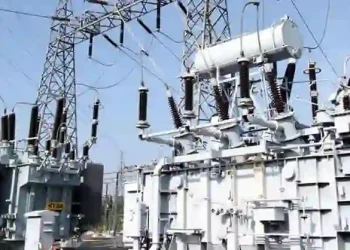
PINL handles the full pipeline infrastructure cycle, covering engineering, procurement, construction, maintenance and security. Along the TNP corridor, its efforts have focused on protecting the line through a surveillance network covering 216 host communities, with local youths, traditional rulers, women’s groups and community leaders enlisted in safeguarding the national asset.
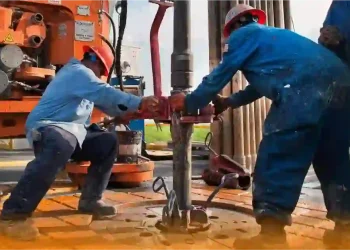
Continuous monitoring and quick response have enabled the identification and dismantling of illegal bunkering sites and crude theft points along the network, leading to arrests and the destruction of illegal refining camps. As breaches have declined, operators have been able to bring previously shut-in wells back online, directly boosting national output.


PINL credits its zero-infraction record to community partnership, saying that providing employment and involving residents in surveillance has built local ownership of pipeline protection, cutting down community-related disruptions and strengthening cooperation between operators and host communities.
Lokpobiri noted that production still falls short of the national target of 2.5 million bpd, pointing to Nigeria’s reserves of about 37 billion barrels of crude and 209 trillion cubic feet of gas as untapped capacity. He added that sustained output along the TNP corridor will continue to depend on keeping the line free of infractions.
READALSO:
- COAS Shaibu Appoints Commanders as Tinubu Approves Four New Army Divisions
- Makinde Appoints Adeniran to Lead APM Presidential Campaign in Oyo
- Canada-Based Prophetess Apologises to Husband After Backlash Over Mother-in-Law’s Death Post
- Many Feared Dead in Kaduna Illegal Mining Clash, BEPU Calls for Full Investigation
- 2027: Tinubu vows to fight for second term, tells opposition ‘we’ll wrestle to the finish’